Table of Contents
ToggleWhat Is Graveyard Cleaning?
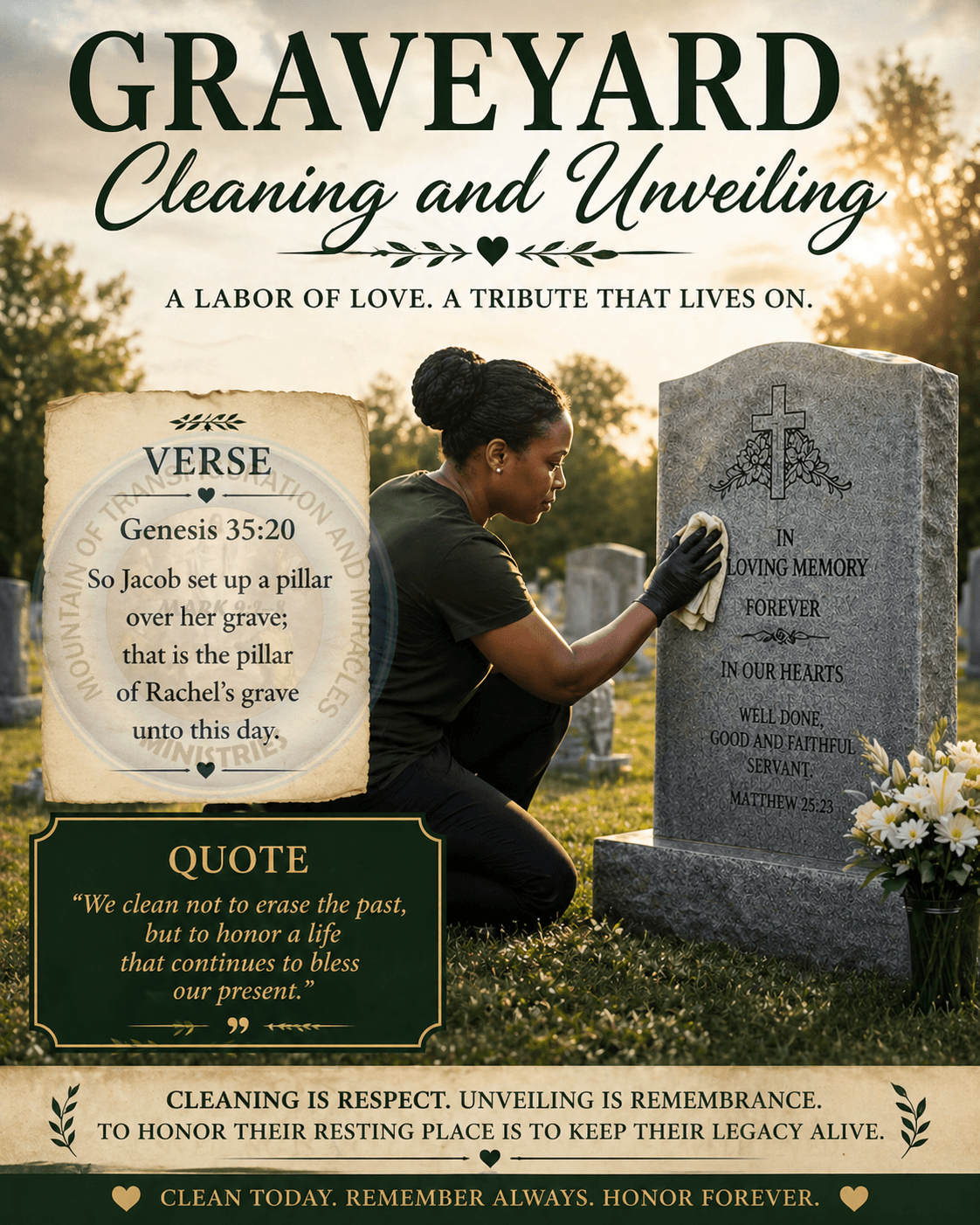
“Graveyard cleaning” is generally maintaining or tidying a burial place out of respect and remembrance of the dead person in question for instance it could be a parent (Exodus 20:12), not as a spiritual or occult ritual.
That can include things like:
- removing weeds or trash
- washing the headstone
- repainting or repairing markers
- keeping the area neat in honor of the deceased
Should Christians Do Graveyard Cleaning Or Not?
Yes — Christians can clean a graveyard or a loved one’s grave, as long as it is done as respectful maintenance, not as a spiritual ritual or attempt to contact the dead. The Bible does not forbid caring for burial places. In fact, Scripture shows people honoring and marking graves: “Woe to you… For you are like whitewashed tombs, which outwardly appear beautiful, but within are full of dead people’s bones…” (Matthew 23:27). We see that in this verse that Jesus’ warning was about inner character, not grave maintenance. The Bible does not present grave maintenance as sinful or spiritually dangerous.
Can A Christian Do Grave Unveiling Or Not?
Graves were marked and cared for in Scripture: “Jacob set up a pillar upon her grave…” (Genesis 35:20). This verse shows that burial places were intentionally marked and preserved, not neglected or treated as forbidden ground.
Yes—a Christian can attend or take part in a grave unveiling (often called a grave or headstone unveiling or memorial unveiling), as long as it is done as a memorial and remembrance, a time of prayer to God to comfort the family members not as a spiritual ritual involving communication with the dead or invoking spirits.
So grave unveiling is not about “speaking to the dead during the unveiling as if being present” or “activating” or “releasing spirits,” but it is:
- remembering a person
- acknowledging loss
- bringing closure to grief
- trusting God for eternal life
What a Christian grave unveiling should look like. It should be a time to:
- reading Scripture about hope and resurrection
- prayer to God for comfort for the family
- remembering the life of the deceased
- simple unveiling of the headstone
- avoiding ritual language about spirits
When Is Doing Graveyard Cleaning Wrong And Dangerous?
Graveyard cleaning is not automatically wrong for Christians. It becomes wrong or spiritually dangerous only when it crosses into occult practices, fear-based superstition, or attempts to contact the dead. If graveyard activity includes rituals to speak to, call, or consult the dead asking for their help, or trying to receive messages from them, the Bible forbids it: “There shall not be found among you anyone who… inquires of the dead.” (Deuteronomy 18:10–11).
According to Ephesians 5:11, “Have nothing to do with the fruitless deeds of darkness…” especially when they involves rituals, offerings, or spiritual ceremonies (dangerous). the warning is about practices, not graveyards themselves. If cleaning the grave is mixed with rituals like:
- offerings things or performing spiritual ceremonies to the ancestors
- invoking spirits for protection
- speaking “blessings” to spirits
- burning items for “spiritual cleansing”
- speaking to the dead as if they can act
- treating graves as spiritual portals
This is considered spiritually wrong in Scripture. “Do not turn to mediums or necromancers…” (Leviticus 19:31). If a believer believes:
- the grave has power over them
- spirits will attack unless rituals are done
- cleaning must follow “spiritual rules” for safety
This is very wrong because: “…God has not given us a spirit of fear…” (2 Timothy 1:7). Here fear replaces faith, and superstition replaces trust in God. Remember that If grave practices become a source of protection, blessing, or guidance, the Bible warns against replacing God: “You shall have no other gods before Me.” (Exodus 20:3).
Are there Any “Spirits Of The Dead” That Live In The Graveyard?
According to Ecclesiastes 9:5 “For the living know that they will die, but the dead know nothing; they have no further reward, and even their name is forgotten. Their love, their hate and their jealousy have long since vanished; never again will they have a part in anything that happens under the sun.” This verse shows us that the dead are not active in the world in a way that affects the living from their graves. In short, the dead are not wandering around graveyards interacting with the living. After all the bible 2 Corinthians 5:8 reminds us that “Absent from the body… present with the Lord.”
But due to too much grieve, fear and negative feelings associated with graveyards they tend to attract evil spirits to come and dwell there for instance in the story of the man who lived in the tombs: “When Jesus climbed out of the boat, a man possessed by an evil spirit came out from the tombs to meet him. This man lived in the tombs, and no one could bind him anymore, not even with a chain.” Mark 5:2-3.
Here in this verse, we see that the man was oppressed by an evil spirit that influenced him, not the graveyard itself. The tombs were a result of his condition, not the source of spirits. The evil spirit him away from normal society into isolation. e ended up living in a place associated with death and uncleanness—the tombs. A location itself does not have power over someone apart from God’s authority. Superstition about places can create unnecessary fear.
Conclusion.
The Bible shows that evil spirits can oppress people, but it does not teach that graveyards are spiritual homes for those spirits. Brethren grave unveiling should not be about the dead or their spirits—it should be about honoring life, comforting the living, and trusting God’s promise of resurrection.
Recommended Topic:
The Graveyard Spirit: 45 Proven Prayers Against It Now
Graveyard cleaning, Graveyard cleaning, Graveyard cleaning, Graveyard cleaning, Graveyard cleaning, Graveyard cleaning